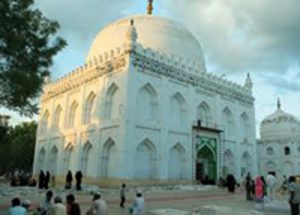
Syed Muhammad Hussaini commonly renowned as Hazrat Khwaja Banda Nawaz Gesu Daraz was a famous Sufi saint from India of Chishti Order, who advocated understanding, tolerance and harmony among various religious groups.
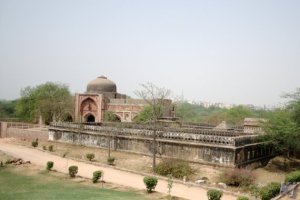
Jamali-Kamali Mosque in Andheria Morh, Mehroli, New Delhi
Shaikh Fazlu’llah, also known as Shaikh Jamali Kamboh or Jalal Khan or Jamali, was a great saint and poet during the reign of Sikander Lodi and Humayun. Shaikh Jamali died in the year 1536. The mosque was built during 1528-1529. The tomb was built in the year 1528. It has two graves. One grave is of Jamali. The other one is of a person known as Kamali. No other information is known about Kamali.
Jamali-Kamali Mosque in Andheria Mor, Mehroli, New Delhi
Jamali-Kamali Mosque in Andheria Mor, Mehroli, New Delhi
On a crisp March morning in 2020, gridlocked cars honk noisily at a roundabout opposite a high wall, guarded by a handful of uniformed men in the Afghan capital. Behind the wall lies Kabul Public Library, a simple, three-storey brick structure constructed 55 years ago. Trapped between imposing government buildings, the library is an oasis in the chaotic capital – its corridors, run-down and dimly lit, lie silent, but for the faint chattering of guards drinking tea outside.
“Afghan poetry is both subtle and profound, hinting at notions of spiritualism, and an Afghan sense of the transcendental,” muses 81-year-old poet Ghulam Haidar Haidari Wujodi as he hunches over his desk nestled between teetering towers of books on the library’s top floor.




![Eighty-one-year old Sufi mystic and poet Haidari Wujodi sits at his desk in Kabul Public Library [Lynzy Billing/Al Jazeera]](https://www.aljazeera.com/wp-content/uploads/2021/06/392A8014-edited.jpg?resize=770%2C513)


