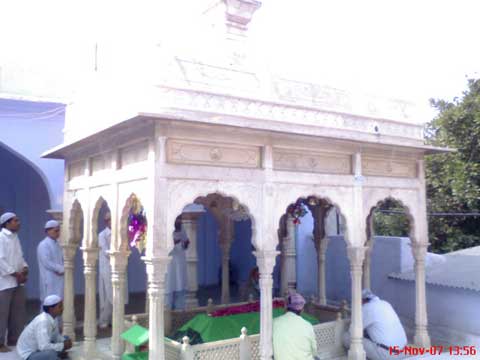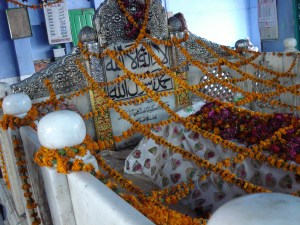
Mazar of Shah Kalimallah jahanabadi Photo (c) Imam Salim Chishti 2017
Shah Kalim Allah Jahanabadi (there are many variations on the spelling and format of his name) was a great Sufi Saint in the Chishti lineage. He founded the Kaleemi branch of the order that migrated to Hyderabad, India. Eventually this led to Hazrat Inayat Khan meeting Syed Muhammad Abu Hashem Madani in Hyderabad. Madani then sent Inayat Khan to the west.
LAHORE: The 974th three-day annual urs of Syed Hasan Ali bin Usman bin Ali Al-Jalabi Al- Hajveri, also known as Data Ganj Bakhsh (RA), started with full religious zeal and traditional fervour in the provincial capital on Wednesday. On the occasion, foolproof security arrangements were made to avoid any untoward incident.
The Assumption of the Blessed Virgin Mary into Heaven at the end of her earthly life is a defined dogma of the Catholic Church. The Feast of the Assumption, celebrated every year on August 15, is a very old feast of the Church, celebrated universally by the sixth century. It commemorates the death of Mary and her bodily assumption into Heaven, before her body could begin to decay–a foretaste of our own bodily resurrection at the end of time. Because it signifies the Blessed Virgin’s passing into eternal life, it is the most important of all Marian feasts and a holy day of obligation in the Catholic Church.
Hazrat Allama Peerzada Mawlana Chaman Qadri (may Allah grant him a long life and sanctify his secret) was a master of the Qadri Tariqa, an embodiment of the Sunnah, and one of India’s foremost spokesmen for tolerance and interfaith dialogue. He was an advocate for peaceful co-existence in today’s trying times, and served as the Chief Qazi in Bundi, Rajasthan. He was also a member of the Waqf Board and Hajj Committee, President of the All-India Qaumi Ekta Committee and All-India Seerate Committee in Rajasthan. Hazrat Sahib spent more than a quarter of a century under the auspicious gaze of his paternal uncle, Hazrat Muzaffar Ali al-Hanafi (‘Dāta Sahib’).
Umar bin al-Khattab, the Second Khalifa of the Muslims
Umar, also spelled Omar (Arabic: عمر بن الخطاب, translit.: `Umar ibn Al-Khattāb, Umar Son of Al-Khattab, born 579 CE, was one of the most powerful and influential Muslim caliphs (guardians) in history. He was a Sahabah or companion of the Islamic prophet Muhammad. He succeeded Abu Bakr (632–634) as the second Rashid of the Rashidun Caliphate on 23 August 634. He was an expert Islamic jurist and is best known for his pious and just nature, which earned him the title Al-Faruq (“the one who distinguishes between right and wrong”). He is sometimes referred to as Umar I by historians of Islam, since a later Umayyad caliph, Umar II, also bore that name.