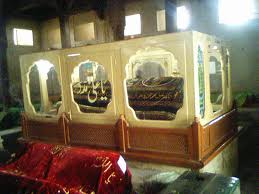
The sheikh appears in the Chishti and Sohrawardi silsilat but I have found no other written information about him. The picture is of the tomb in Multan.

The sheikh appears in the Chishti and Sohrawardi silsilat but I have found no other written information about him. The picture is of the tomb in Multan.

Abu Ismaïl Abdullah ibn Abi-Mansour Mohammad or Khwajah Abdullah Ansari (1006-1088) was a famous Persian poet and Sufi. He was born and died in Herat (then Khorasan, now one of the cities of Afghanistan), and that is why he is known as Pir of Herat. He is also known as “Shaikul Mashayekh” [Master of (Sufi) Masters] and his title was “Shaikhul Islam”.
Continue reading
Hazrat Inayat Khan called Murshida Rabia Martin “the mother of the Sufi Movement in the United States.” She was the first Murshida initiated by Hazrat Inayat Khan and she established the Khanka in Marin County, California which later became a center for Murshid Samuel Lewis.
Continue reading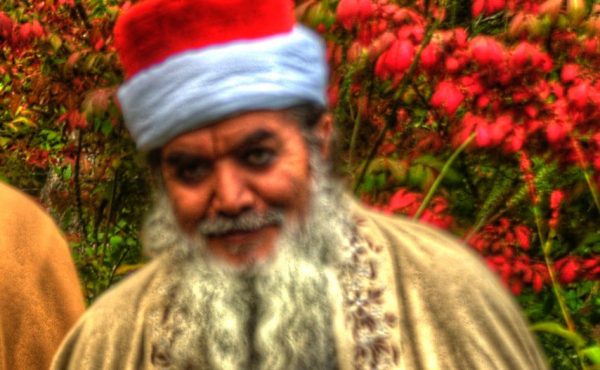
Third anniversary of a close friend and spiritual leader in the Chishti order in Afghanistan and world-wide. We remember many meetings in Delhi and in New Lebanon, NY.
Pir Zia Inayat Khan says:

The world lost a great mystical luminary today. Beloved Huzur Sayyid Ahmad Shah Chishti Maududi, a direct descendant of Khwaja Qutb ad-Din Maudud Chishti, was the international leader of the Chishti Order. Sayyid Ahmad Shah was an inspired poet, a profound scholar, and a revered spiritual teacher. Over many years, he graced the ‘Urs of Hazrat Inayat Khan in Delhi with his presence, traveling annually from Herat, Afghanistan. When I completed my book Mingled Waters, he did me the honor of writing the introduction. My last meeting with Huzur Sayyid Ahmad Shah was in Konya in July. Despite poor health, he was, as always, the essence of graciousness. I have no words to describe what Huzur Sayyid Ahmad Shah has meant to me. He was ‘ishq personified, an ocean of cosmic love. My consolation lies in the conviction that love is stronger than death. May Allah bless his soul to the utmost in heaven.
From https://www.pirzia.org/huzur-sayyid-ahmad-shah-chishti-maududi/

Hazrat Khwaja Sayyid Kamal Uddin (r.a) was one of the two major successor of the great Sufi master Hazrat Khwaja Nasir Uddin Chiragh (r.a). During the twilight of Dehli years, he was responsible for firmly rooting the sisilah in the Gujrat, a place of relative calm.
Continue reading Ihsan Center - Islam From The Heart