
Meaning and Majesty of Tawḥīd
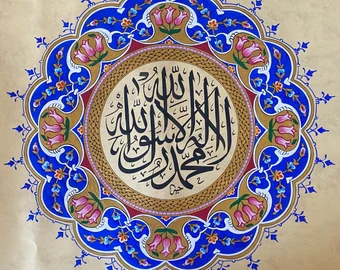
Alḥamdulillāh, we praise Him, seek His help, and ask for His forgiveness. We seek refuge in Allah (swt) from the evil within ourselves and from the consequences of our deeds. Whomever Allah (swt) guides, none can misguide; and whomever He allows to go astray, none can guide. I bear witness that there is no god worthy of worship except Allah (swt) alone, without partner, and I bear witness that Muhammad ﷺ is His servant and messenger.
O believers, be mindful of Allah (swt) as He deserves, and do not die except in a state of Islam.
Tawḥīd is the foundation of Islam. It is the first call of every prophet, the purpose of revelation, and the reason we exist.
Allah (swt) says:
“And We did not send any messenger before you except that We revealed to him: There is no deity worthy of worship except Me, so worship Me.” (Qur’an 21:25)
وَمَآ أَرْسَلْنَا مِن قَبْلِكَ مِن رَّسُولٍ إِلَّا نُوحِىٓ إِلَيْهِ أَنَّهُۥ لَآ إِلَـٰهَ إِلَّآ أَنَا۠ فَٱعْبُدُونِ ٢٥
Tawḥīd is not only a statement of the tongue — it is a worldview, a way of living, a lens through which the believer sees everything.
Scholars describe Tawḥīd in three interconnected dimensions:
- Tawḥīd al‑Rubūbiyyah — Allah (swt) alone is the Creator, Sustainer, Controller of all affairs. Nothing happens except by His will.
- Tawḥīd al‑Ulūhiyyah — Allah (swt) alone deserves worship, love, fear, hope, reliance, and obedience.
- Tawḥīd al‑Asmā’ wa’l‑Ṣifāt — Allah (swt) is known through His beautiful Names and perfect Attributes, without distortion or comparison.
When these three settle in the heart, a person becomes unshakeable.
A heart anchored in Tawḥīd:
- does not fear creation
- does not chase people’s approval
- does not collapse under hardship
- does not drown in anxiety
- does not lose itself in dunya
Because it knows: Allah (swt) is enough.
Allah (swt) says:
“Is Allah (swt) not sufficient for His servant?” (Qur’an 39:36)
أَلَيْسَ ٱللَّهُ بِكَافٍ عَبْدَهُۥ ۖ وَيُخَوِّفُونَكَ بِٱلَّذِينَ مِن دُونِهِۦ ۚ وَمَن يُضْلِلِ ٱللَّهُ فَمَا لَهُۥ مِنْ هَادٍۢ ٣٦
Shirk is not only idols of stone. It can be idols of the heart:
- relying on wealth instead of Allah (swt)
- fearing people more than Allah (swt)
- seeking status more than Allah (swt)’s pleasure
- obeying desires over divine guidance
The Prophet ﷺ said:
“The thing I fear most for my ummah is minor shirk.” They asked, “What is minor shirk?” He said: “Showing off.”
Tawḥīd purifies the heart from these hidden diseases.
Second Khutbah
To strengthen your Tawheed:
- Know Allah (swt) deeply Study His Names — Al‑Raḥmān, Al‑Qadīr, Al‑Ḥakīm, Al‑Wakīl. The more you know Him, the more you trust Him.
- Purify your intention Every action — prayer, work, charity, kindness — make it for Allah (swt) alone.
- Rely on Allah (swt) in all affairs Take the means, but attach your heart only to Him.
- Remember Allah (swt) often Dhikr polishes the heart until it reflects pure Tawḥīd.
- Avoid sins Every sin weakens Tawḥīd because it places desire above obedience.
When Tawḥīd is alive in the heart, life becomes lighter. Hardships become meaningful. Blessings become reminders. And death becomes a return to the One you always loved.
The Prophet ﷺ said:
“Whoever dies knowing that there is no god but Allah (swt) will enter Paradise.”
O Allah (swt), make us people of Tawḥīd — in our hearts, our actions, and our lives. O Allah (swt), purify our intentions, strengthen our faith, and fill our hearts with certainty. O Allah (swt), protect us from shirk, open or hidden, major or minor. O Allah (swt), let our final words in this world be lā ilāha illā Allāh.
And allah knows best.
Indeed, Allah (swt) commands justice, excellence, and kindness to relatives, and He forbids immorality, wrongdoing, and oppression. Remember Allah (swt), and He will remember you. Be grateful to Him, and He will increase you

